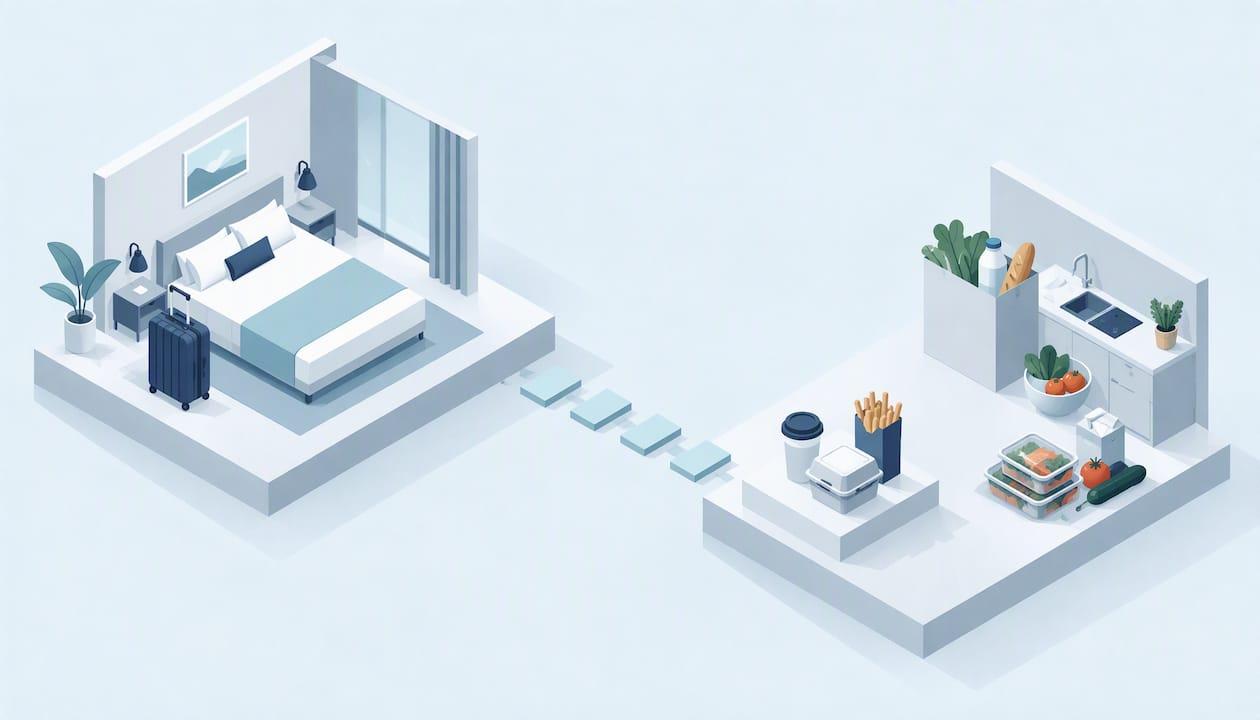
Food is the part of a trip budget you control most. You can't haggle with an airline, but you decide every day whether breakfast is a $16 plate or a $3 bowl of oats. The biggest lever is simple: stay somewhere you can cook, shop at a regular grocery store, and keep restaurant meals for the ones worth paying for. This guide shows how to set a food budget, what to cook with limited equipment, and how families and long-stay travelers can keep costs down without eating dull food.
TL;DR
- Price a typical breakfast, lunch, dinner and coffee at your destination first, then set a daily food budget with a buffer.
- Cooking in your room is almost always cheaper than eating out, but only if the room really has what you need. Check the equipment before you book.
- Cook breakfast and some dinners, pack snacks and a water bottle, and spend your restaurant money on one or two meals that matter.
- Cooking is not always the cheapest option. In some destinations, street food beats self-catering.
Table of Contents
- Start with a food budget you can actually follow
- Why a room with a cooking surface changes the math
- Build a meal plan that flexes
- Shop like a local, not a tourist
- Pack snacks and water so you don't pay airport prices
- Road trips: pack a small kitchen kit
- Eat out smarter when you do eat out
- Perspective: why the cooking surface decides everything
- Families and long stays: make the kitchen do the heavy lifting
- Find a hotel with a kitchen you can trust
- A simple checklist before you go
- FAQ
- Sources
Start with a food budget you can actually follow
Most travelers overspend on food because they never set a number. They set a hotel budget and a flight budget, then let meals fill whatever is left.
A workable method has three steps.
- Price your anchors. There is no universal daily food figure. Price a representative breakfast, lunch, dinner, coffee and water in the place you are visiting before you set anything. A quick look at menus and grocery prices online is enough. TravelBudget suggests estimating a casual breakfast, casual lunch, casual dinner and one special dinner, then adding snacks, water and coffee.
- Split the day into fixed and flexible. MyFT recommends dividing a daily allowance into fixed meals, flexible spending and a buffer. The buffer absorbs price surprises and pays for one memorable meal.
- Check the total early. Separate fixed costs from controllable daily costs and look at your running total during the trip, so you can fix overspending on day two instead of day nine.
Here is how that looks for a family of four on a five-night trip. The numbers are illustrative, not quotes. Say you set aside $120 a day for food. You might plan $20 for groceries to cover breakfast and packed lunches, $45 for a cooked dinner's ingredients, and keep $55 as flexible spending and buffer. On the night you eat out, the buffer pays for it. On the nights you don't, it rolls over to the farewell dinner.
Why a room with a cooking surface changes the math
A restaurant meal carries rent, labor and a tip. A grocery meal carries ingredients. For one person the gap is a few dollars. For a family of four eating three meals a day, it adds up quickly over a week.
The savings only happen if you can use what you buy. Investopedia notes that cooking in accommodation with a kitchen is almost always cheaper than eating out, but that travelers should check amenities carefully before relying on that plan. Navy Federal Credit Union likewise suggests choosing lodging with a mini-fridge, microwave or full kitchenette so you can prepare simple breakfasts and dinners.
Know what "kitchen" means before you book
Hotel listings use the word loosely. A microwave and a mini-fridge can handle oatmeal, sandwiches and reheated leftovers, but they won't cook pasta or eggs. A kitchenette usually adds a stovetop or hot plate. A full kitchen adds an oven and real counter space.
Before you book, ask these questions:
- Is there a burner or cooktop, or only a microwave?
- Which room types have it? Often only some rooms in a hotel do.
- What comes with it: pots, pans, knives, plates, a coffee maker?
- Is the fridge full-size or a bar fridge?
This is the gap we built HotelKitchens to close. Our listings show which room types have cooking amenities, and we only publish rooms that meet one kitchen standard, including a cooking surface.
Build a meal plan that flexes
A rigid plan breaks on day two when you find a bakery you love. A loose plan holds up. PlanEat AI suggests sorting meals into four types: cook, assemble, eat out and backup. For a one-week trip, its example is one cooked meal a day, one or two assembled meals, one meal out and a reserve option.
In practice:
- Cook: dinner on arrival night, and two or three more dinners over the week.
- Assemble: sandwiches, yogurt and fruit, cheese and crackers. No heat needed.
- Eat out: your best-value meal, often lunch. Nomadic Matt suggests eating a better-value lunch when possible and cooking dinner, which keeps both the local flavor and the budget.
- Backup: a pantry meal such as pasta and jarred sauce for the night plans collapse.
Cook dishes that share ingredients
The New York Times recommends a loose shopping and meal plan built on simple, adaptable dishes that fit the equipment you have. Associated Press advises stretchable dishes such as grain salads, stovetop pasta, salads and grilled foods, with leftovers deliberately reused in sandwiches, quesadillas, soups or stir-fries.
A sample three-day chain from one grocery run:
| Day | Meal | What you buy once | What it becomes later |
|---|---|---|---|
| 1 | Pasta with sauce and sautéed vegetables | Pasta, jar of sauce, zucchini, peppers | Leftover vegetables go into tomorrow's omelet |
| 2 | Vegetable omelet with toast | Eggs, bread | Extra bread becomes lunch sandwiches |
| 3 | Rotisserie chicken, salad, rice | Chicken, greens, rice | Remaining chicken goes into quesadillas or fried rice |
Wikivoyage makes a similar point: turn dinner leftovers into an omelet, frittata, salad or sandwich wrap the next day, and buy only the quantity you need when bulk shops allow it.
Seasoning is where short-stay cooking usually falls flat, because you won't buy a full spice rack for four nights. A small pre-mixed blend from home solves it, and simple homemade spice blend recipes show how to mix a few for different cuisines so one chicken and one pot of rice can taste different on different nights.
Breakfast is the easiest win
Breakfast is the meal where hotel-room cooking pays off fastest. A plated hotel or café breakfast for a family can cost as much as a grocery run for the whole day. Oats, eggs, yogurt, fruit and coffee need little equipment. If your room has only a fridge, overnight oats need no heat at all: mix the night before, eat in the morning, and carry a jar for the road.

Shop like a local, not a tourist
Grocery shopping while traveling is cheaper and also a good way to learn a place. NerdWallet notes that local grocery stores and markets can cost less than waiter-service restaurants and help you avoid hunger-driven purchases. Navy Federal suggests buying fresh ingredients at local markets and stores and building picnic-style meals from delis or bakeries.
Some habits that keep the bill down:
- Shop on day one, close to your hotel. Do the big run before you're hungry and before you've bought airport snacks.
- Buy small. Single-use sizes of oil, salt and condiments cost more per ounce, but throwing out half a bottle costs more than that. Ask the front desk whether guests leave pantry items behind.
- Check discounted items. Nomadic Matt suggests looking at lunchtime specials and products discounted near their sell-by date, which suit a meal you will cook that night.
- Use the deli counter. A hot rotisserie chicken, a loaf and a bag of salad feed a family for less than one restaurant entrée each.
Pack snacks and water so you don't pay airport prices
Impulse buying is where food budgets leak. A $6 bottle of water at an airport, a $5 granola bar at a gas station, a $14 sandwich because everyone is cranky at 3 p.m.
NerdWallet suggests packing shelf-stable snacks such as jerky, protein bars, candy, nuts and granola bars and carrying a refillable bottle where the water is clean. Navy Federal makes the same case for nonperishable snacks and reusable water bottles to cut impulse purchases. Take a Chef lists nuts, dried fruit, granola bars and energy bars as compact options for transit or delays.

Keep a snack pouch in your day bag and refill it from your grocery run, not from the hotel lobby.
Road trips: pack a small kitchen kit
Driving gives you room to carry food, which is the biggest cost advantage of a road trip. Pack a small, permitted kit. Associated Press suggests a sharp knife, cutting board, salt, pepper, pantry staples, resealable bags and small leftover containers. Better Homes & Gardens adds kitchen scissors, covered paring knives, a small cutting board and unbreakable glasses as portable equipment.

For the drive itself, think cooler-friendly or no-cook: sandwiches, salads, deli chicken, cheese boards. Better Homes & Gardens also suggests ready-to-eat meats with microwaveable potatoes for rooms with limited facilities. Keep snacks and drinks within reach of the back seat so you aren't pulling off the highway for them.
If you're checking flight baggage instead, a knife and a cutting board may not be permitted in carry-on, so check airline and airport rules before you pack.
Eat out smarter when you do eat out
Cooking every meal isn't the goal. A trip without local food is a worse trip, and the cheapest option isn't always the grocery store. Bon Appétit notes that the relative value of cooking varies by destination, with street food sometimes cheaper than self-catering. Nomadic Matt says the same about some Asian destinations. If a $3 bowl of noodles is down the street, a $12 grocery run for a single dinner isn't a bargain.
When you eat out:
- Ask locals where they eat. Matt Kepnes argues in Bon Appétit that asking where people personally eat surfaces affordable everyday places better than generic recommendations.
- Go off-peak. Navy Federal recommends dining off-peak, using happy hours or specials, and sharing family-style meals.
- Balance, don't deprive. The same guide suggests mixing special meals with cheaper options rather than treating every meal as a splurge.
- Build each day around one filling meal out. MyFT suggests one big meal out with cheaper breakfasts or lunches assembled from inexpensive ingredients.
Perspective: why the cooking surface decides everything
We look at hotel rooms for a living, and one pattern never changes: travelers who save the most on food are the ones who knew before booking exactly what was in the room. A microwave is not a kitchen. Plenty of listings say "kitchenette" and mean a mini-fridge and a coffee maker, and a family finds that out at 7 p.m. on arrival night with hungry kids and a bag of raw chicken.
That is why we check for a cooking surface, not just a microwave, and why every listed room is checked by both a person and an AI model, with the evidence shown on the listing. You can read how it works on our verification page.
Our advice for anyone planning around a kitchen: decide first what you will cook, then pick the room. If your plan is oatmeal and sandwiches, a fridge and microwave are enough. If it is pasta and eggs, you need a burner. If you are staying a week or more, you want counter space and real cookware, because that is when cooking turns from a novelty into the thing that holds your budget together.
— Ross
Families and long stays: make the kitchen do the heavy lifting
For families, food is often the largest flexible cost. For business travelers on long assignments, restaurant dinners every night get expensive and tiresome. Both groups benefit from the same approach: a kitchen-equipped room, a flexible plan for sharing ingredients across meals, and room in the budget for local specialties.
Navy Federal's guidance fits this well: cook breakfasts and selected dinners, pack lunches or picnics, reuse leftovers deliberately, and keep some budget for regional dishes at markets and casual restaurants.
A few tactics for longer stays:
- Do one big shop and two small ones. Stock staples once, then top up fresh items midweek.
- Cook double on Monday. The second portion is Tuesday's lunch.
- Track two days, then adjust. Voyasee's planner suggests tracking actual spending for two days and adjusting the daily budget from there.
- Let kids pick one local meal. It gives them a say and keeps the restaurant spend to a planned number.
- Keep a weekly restaurant night. It stops cooking from feeling like a chore.
We've written more on eating well on the road if nutrition matters as much as cost on your trip.
Find a hotel with a kitchen you can trust
If you're ready to put this plan into practice, start with a room that can support it. HotelKitchens is a directory of hotels with verified in-room kitchens and kitchenettes, with guest ratings and room-level kitchen evidence on each listing. Browse by state on our locations page, or go straight to a destination such as Honolulu, Denver or Minneapolis.

When you click through to book, you book with our booking partners, and that is how the site is funded. The listing tells you which room type has the cooking surface, so you can pick it at checkout.
A simple checklist before you go
- Price your breakfast, lunch, dinner and coffee at the destination and set a daily food number with a buffer.
- Confirm the room has the equipment your meals need: burner, fridge size, cookware.
- Plan about one cooked meal a day, one or two assembled meals, and one meal out.
- Pick dishes that share ingredients, and plan leftovers as tomorrow's lunch.
- Pack snacks, a refillable bottle, resealable bags and a small seasoning kit.
- Find the nearest grocery store or market before you arrive.
- Check your running total after two days and adjust.
FAQ
How much should I budget for food per day while traveling?
There's no single right number, because prices differ by destination. Price a typical breakfast, lunch, dinner, coffee and water for where you're going, then add a small buffer. Check your spending after a couple of days and adjust.
Is cooking really cheaper than eating out on vacation?
Usually, yes. Investopedia says cooking in accommodation with a kitchen is almost always cheaper than eating out. The exception is places where street food is very cheap, so compare local prices before you commit to grocery shopping.
What should I cook with only a microwave and a mini-fridge?
Stick to assembly and reheating: overnight oats, sandwiches, salads, deli chicken, cheese boards and microwaveable potatoes. If you want to cook pasta, eggs or stir-fries, book a room with a cooktop and confirm that it is in the room type you are reserving.
What snacks are best to pack for travel?
Shelf-stable, compact options such as nuts, jerky, granola bars, protein bars and dried fruit work well. Add a refillable water bottle where tap water is safe to drink. Check airline and destination rules on carrying food across borders.
How do I save on food when traveling with kids?
Book a room with a kitchen, cook breakfast and a few dinners, and pack lunches or picnics. Keep a set amount for one local meal out, and let the kids choose it.
Sources
- Travel Budget Tips (Investopedia)
- Travel Tips to Stretch Your Vacation Food Budget (Navy Federal Credit Union)
- How to Plan a Trip on a Budget (Airvago)
- Estimating Food Costs Before You Travel (TravelBudget)
- How to Eat Well on a Travel Budget (MyFT)
- Vacation Meal Planning (PlanEat AI)
- How to Cook in a Vacation Rental (The New York Times)
- How to cook delicious meals in a vacation rental house (AP)
- How to Eat Cheap When You Travel the World (Nomadic Matt)
- Food and drink (Wikivoyage)
- 12 Easy Money Saving Travel Tips (NerdWallet)
- How to plan meals for a trip (Take a Chef)
- How to Cook Great Meals on the Road (Better Homes & Gardens)
- What 20 Years of Traveling Taught Me About Eating Like a Local (Bon Appétit)
- Food Travel Budget & Local Eating Planner (Voyasee)