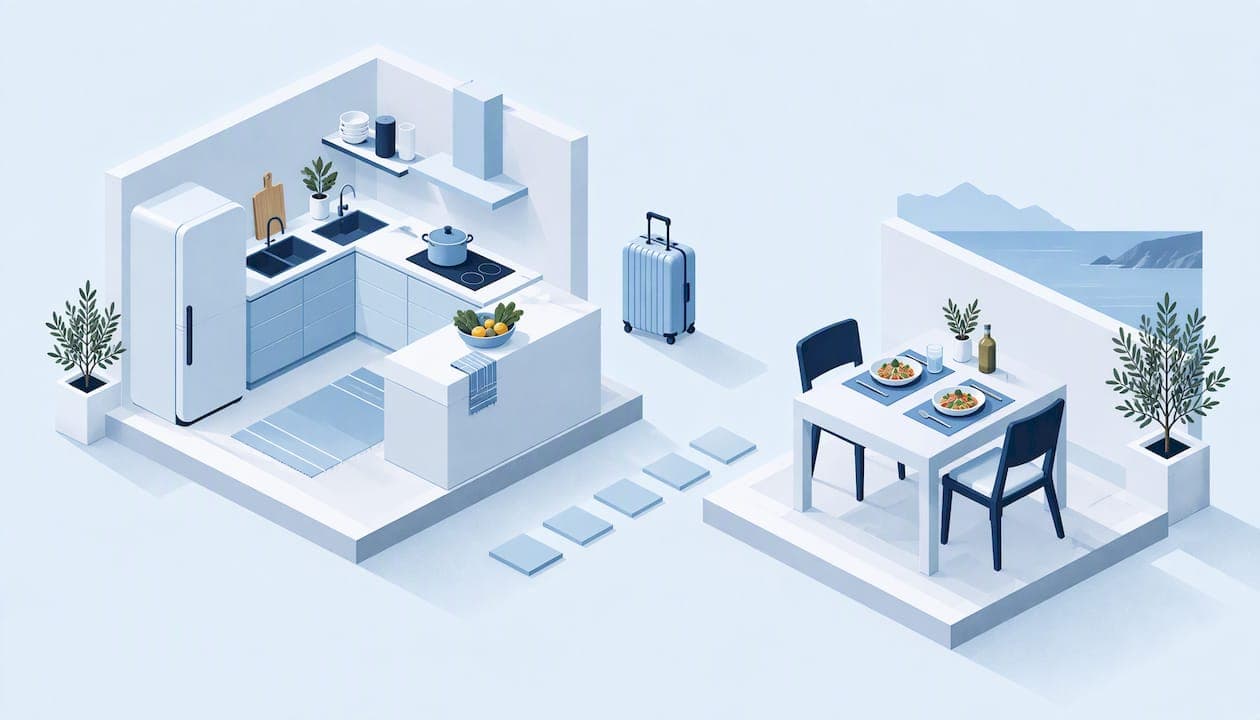
Cooking on vacation works when you keep it small: plan about three real dinners, lean on one-pot and sheet-pan meals, bring a few key ingredients, and book a room with a kitchen that matches what you plan to make. Eat out the rest of the time. You get the savings and the comfort of your own food, and you still get a break.
This guide covers how to plan, what to cook, what to pack, how to keep kitchen time short, and how to check that your room can actually do the job.
TL;DR
- Plan three dinners and a couple of breakfast-for-dinner nights, then eat out or order in for the rest of the week.
- One-pot, sheet-pan and slow-cooker meals keep cleanup and active cooking time low.
- Pack a good knife, salt, pepper, chile flakes, olive oil and vinegar, because rental and hotel kitchens are often thinly stocked.
- Check that your room has a cooking surface, not just a microwave, before you book and before you shop.
- DIY-style meals like tacos or noodle bowls let everyone, including guests with dietary needs, build their own plate.
Table of Contents
- Why cooking on vacation is worth it
- Start with the kitchen you will actually have
- Build a simple vacation meal plan
- Easy vacation meals that actually work
- What to pack for a hotel or rental kitchen
- Keep kitchen time short
- Handle food safely
- How much can you save?
- Our perspective
- Find a room where your meal plan works
- FAQ
- Sources
Why cooking on vacation is worth it
Most people who cook on a trip do it for one of four reasons: money, health, kids, or comfort. Restaurant meals three times a day add up fast for a family, and a week of them can leave anyone craving something plain and green. Kids who melt down in a restaurant at 8 p.m. are often perfectly happy with pasta at a table in your room at 6. And after a long day of sightseeing, there is real pleasure in a quiet dinner you made yourself.
The trap is turning the trip into a second job. Vacation cooking goes wrong when people plan seven elaborate dinners, cook every breakfast, and pack lunches daily. The people who enjoy it tend to cook less than they expect to, and cook smart. If you want a deeper look at the budget side, our guide to saving money on travel food walks through a practical plan, and the healthy eating while traveling guide covers the nutrition side.

Start with the kitchen you will actually have
Every good vacation meal plan starts with one question: what is in the room? Food writers who cook while traveling say vacation food depends on two things, what local produce is ripe and what equipment the lodging has. The second part is where trips get derailed.
A "kitchenette" can mean very different things. Some rooms have a two-burner stove, a full-size fridge, a sink and a set of pans. Others have a mini fridge and a microwave and little else. If you plan a stir-fry and find only a microwave, you will be eating out anyway.
Before you book, look for these basics:
- A cooking surface. A stovetop or induction burner, not only a microwave. This decides what you can cook.
- Refrigerator size. A dorm-size fridge fits drinks and yogurt. It will not hold a week of groceries for a family.
- Sink and counter space. You need somewhere to wash produce and chop.
- Cookware and utensils. Pots, a pan, a knife and a cutting board are the minimum. Our breakdown of what hotel kitchen utensils you actually get shows what is typical and what to bring yourself.
- Photos and descriptions you can trust. Listing photos often show the nicest corner of a room. See what hotel kitchen photos show and what they hide before you rely on one.
This is the exact problem we built our directory around: each listed room is checked for a real cooking surface, so you know which room type to book, not just which hotel.
Build a simple vacation meal plan
A workable plan is short. One family-focused chef service suggests three home-cooked dinners, plus a couple of breakfast-for-dinner nights, and buying proteins that stretch across several meals. The same source points out that eating out or ordering in for the rest of the week helps you avoid grocery fatigue. That is a good rule of thumb for a one-week stay.
A sample week
| Day | Plan | Notes |
|---|---|---|
| Arrival | Eat out or order in | You are tired and the shops may be closed |
| Day 2 | Cook dinner: pasta with a quick sauce | Use groceries from the first shop |
| Day 3 | Eat out, picnic lunch | Leftover pasta can become a packed lunch |
| Day 4 | Cook dinner: tacos or build-your-own bowls | Everyone assembles their own plate |
| Day 5 | Eat out | Try something local |
| Day 6 | Breakfast for dinner: eggs, toast, fruit | Uses up what is left in the fridge |
| Departure | Finish leftovers for breakfast | Buy nothing new |
Breakfasts and snacks do most of the saving, so keep them effortless: yogurt, fruit, oatmeal, bread and eggs, whatever you can make in five minutes.
Shop in two rounds
Do a small, planned shop on day one for staples and the first two dinners. Do a second, smaller shop midweek for fresh items. This keeps the fridge from filling with food that goes unused, and lets you react to what you actually feel like eating.
If several people are traveling together, share the grocery list and build it together. It prevents duplicates and makes sure everyone's needs are covered.
Research shops before you leave
Food writers recommend researching local shops, farms and specialty stores in advance and marking them on a map. Ten minutes of this at home saves an hour of wandering on day one. It also turns grocery shopping into part of the trip. A farmers' market stall or a small cheese shop tells you more about a place than another tourist restaurant.
If you are heading to Slovenia, for example, a guide to local eateries across Slovenia can help you spot places that lean on seasonal produce, and a directory of family-friendly farms in Slovenia is useful when you want to buy from the people who grow the food.
Easy vacation meals that actually work
The best vacation meals share a few traits: few ingredients, one pan, short cooking time, and flexible enough to use whatever the market has. Reporting on vacation-rental cooking points to one-pot, sheet-pan and slow-cooker meals as ideal, because they limit cleanup and active cooking time.
Breakfast
- Yogurt, granola and fruit, with nothing to cook.
- Scrambled eggs with toast and sliced tomatoes.
- Overnight oats made the evening before, ready when you wake.
- Pancakes from a simple mix you bring in a zipper bag, if you have a pan and burner.
Lunch
- Sandwiches or wraps packed for the beach or the trail.
- A cold pasta or grain salad made from dinner leftovers.
- Cheese, bread, fruit and cured meats, assembled on the spot.
Dinner
- Pasta with a fast sauce. Boil, toss with olive oil, garlic and tomatoes or a jar of good marinara, and add a bagged salad.
- Sheet-pan sausages and vegetables. Needs an oven, so check your room first. If you only have burners, use a skillet instead.
- Tacos or fajitas. Cook the protein in one pan and set out toppings.
- Stir-fry with rice. Quick, forgiving, and easy to adjust to what is fresh.
- Breakfast for dinner. Omelets, French toast or frittatas, which are cheap and take twenty minutes.
- Grilled or pan-seared local fish or meat with a simple salad. Let the market choose the star.
The Bon Appétit team notes that some of the best vacation dishes use ingredients you find at a farmers' market, which fits well with cooking simply: ripe tomatoes, fresh corn or good fruit need almost nothing done to them.
Cooking for a crowd or for different diets
When the group has mixed preferences, build-your-own meals solve most of the problem. DIY-style meals let each diner choose foods that work for them and give the group flexibility. Think taco bars, noodle bowls, baked potato bars or pizza night with different toppings.

A small example from the same source: Korean sweet potato noodles are naturally gluten-free, and mushrooms can be cooked separately and served on the side for guests to add. The idea is to keep the base simple and let extras go on the side, so one person's restriction does not shape everyone's dinner. If someone has a serious food allergy, read labels on every product you buy and keep their food and utensils separate.
What to pack for a hotel or rental kitchen
Do not assume a well-stocked pantry. Even in rooms with full cookware, spices and oils are usually missing. Writers who cook on the road suggest packing a chef's knife, flaky and kosher salt, black pepper and chile flakes, olive oil, vinegar and a favorite condiment. Those few items lift almost any basic meal.
A short packing list worth adding:
- A small sharp knife (in checked luggage) and a folding cutting board
- Zipper-top bags and small containers, which the AP's vacation-rental cooking guide recommends for leftovers and taking food on the go
- Dish soap, a sponge and a dish towel
- A small bottle of your favorite hot sauce or spice blend
- Foil or parchment, if you plan to use an oven
- A reusable shopping bag
For what to expect from the room itself, see our hotel kitchen utensils guide. If a pan or knife is missing, ask the front desk before you buy one. Many hotels can lend basic items.
Keep kitchen time short
The point of the trip is not the stove. A few habits keep the work light.
Prep at home. One home cook in a roundup of vacation advice plans a week or two ahead and cooks things that freeze and reheat well, like lasagna. If that does not fit your trip, at least chop onions, mix a spice blend or make a marinade at home and pack it in a sealed container. For a road trip, you can prepare meals at home, such as pulled pork or quiche, and take them along.
Cook once, eat twice. Roast a double batch of chicken and turn leftovers into wraps or salads the next day.
Use one pan. If a recipe needs three pots, skip it.
Share the work. Assign roles: one person cooks, one sets up, one cleans. Dinner at the table with everyone helping also takes the "mom is cooking again" feeling out of it.
Be flexible. If you are exhausted, a grocery-store rotisserie chicken with bagged salad and bread is a perfectly good vacation dinner.
Handle food safely
Good habits matter more when you are away from your own kitchen. Use containers with tight lids for leftovers, label them, and keep them in the fridge instead of leaving them out on the counter. Zipper bags and small containers also make it easy to carry food for day trips. For official guidance on safe temperatures, storage times and cooler use, check the USDA's food safety pages before you travel, especially if you will be driving with perishables or eating outdoors.
On the practical side, wash your hands, wash produce, and use clean cutting surfaces. If you are using a kitchen that other guests have used, rinse pans and plates before you cook with them.
How much can you save?
Cooking some meals almost always costs less than eating every meal out, but how much depends on your group size, destination, grocery prices and how often you cook. Figures from blogs vary widely, so we will not promise a number. Instead, work out your own: estimate what your family spends on a typical restaurant dinner, compare it with a grocery basket for the same meal, and multiply by the number of meals you will cook. Add the cost of staples you buy once, like oil and spices, and remember that leftovers lower the cost of the next meal.
The savings usually come from breakfasts, snacks and packed lunches as much as dinners. For a longer stay, they add up quickly, which is why many extended-stay travelers and business travelers look for rooms with kitchens. Our saving money on travel food guide has a more detailed method.
Our perspective
Most vacation cooking advice assumes you already have a kitchen. In practice, the biggest source of frustration we hear about is arriving at a room advertised with a "kitchenette" and finding a microwave and a mini fridge.
That is why we verify every listed room for a real cooking surface, using both a human check and an AI model, and show the evidence on each listing. We publish only rooms that meet one kitchen standard, so you can see exactly which room types let you sauté, boil or simmer.
Our advice is the same one we give friends: pick the kitchen first, then plan meals around it. A room with a burner, a decent fridge and a few pans gives you freedom to cook three dinners and eat out the rest, without stress.
Ross
Find a room where your meal plan works
If you want to cook on your next trip, start with the room. Our directory lists hotels with verified in-room kitchens and kitchenettes, with guest ratings and room-level kitchen evidence on each listing. You can browse hotels with kitchens and kitchenettes, search by location, or go straight to popular destinations such as Honolulu, Boston, Chicago or Fort Lauderdale. Curious how the checks work? Read how we verify hotel kitchens.

When you are ready to book, you click through to our booking partners to complete the reservation.
FAQ
How do I cook on vacation without spending the whole trip in the kitchen?
Plan only about three dinners and keep the rest of the week for restaurants or takeout. Choose one-pot or sheet-pan meals, prep sauces or marinades at home, and cook double batches so leftovers become lunch.
What are the easiest meals to make on vacation?
Pasta with a quick sauce, tacos, stir-fries, sheet-pan sausages and vegetables, and breakfast for dinner are reliable choices. They need few ingredients and little cleanup. Build-your-own formats also work well for groups with different tastes.
What should I bring if my room has a kitchen?
Bring a good knife, salt, pepper, chile flakes, olive oil, vinegar and a favorite condiment, plus zipper bags and small containers. Check the room's cookware list before you buy anything, since many kitchens have only basics.
Is a microwave enough for cooking on vacation?
A microwave can reheat food and cook oatmeal or eggs, but it limits what you can make. If you want to sauté, boil pasta or cook a full dinner, book a room with a stove or burner. Our listings show which rooms have one.
Sources
- Easy Meals to Make on Vacation, Bon Appétit
- How to Cook for a Crowd with Different Dietary Requirements, America's Test Kitchen
- What to Pack for Your Vacation-Rental Kitchen, Serious Eats
- Family vacation dinner ideas: easy and stress-free meals
- How to cook delicious meals in a vacation rental house, AP News
- My Tried & True Vacation Rental Meal Plan and Grocery List
- Local eateries in Slovenia
- Family-friendly farms in Slovenia