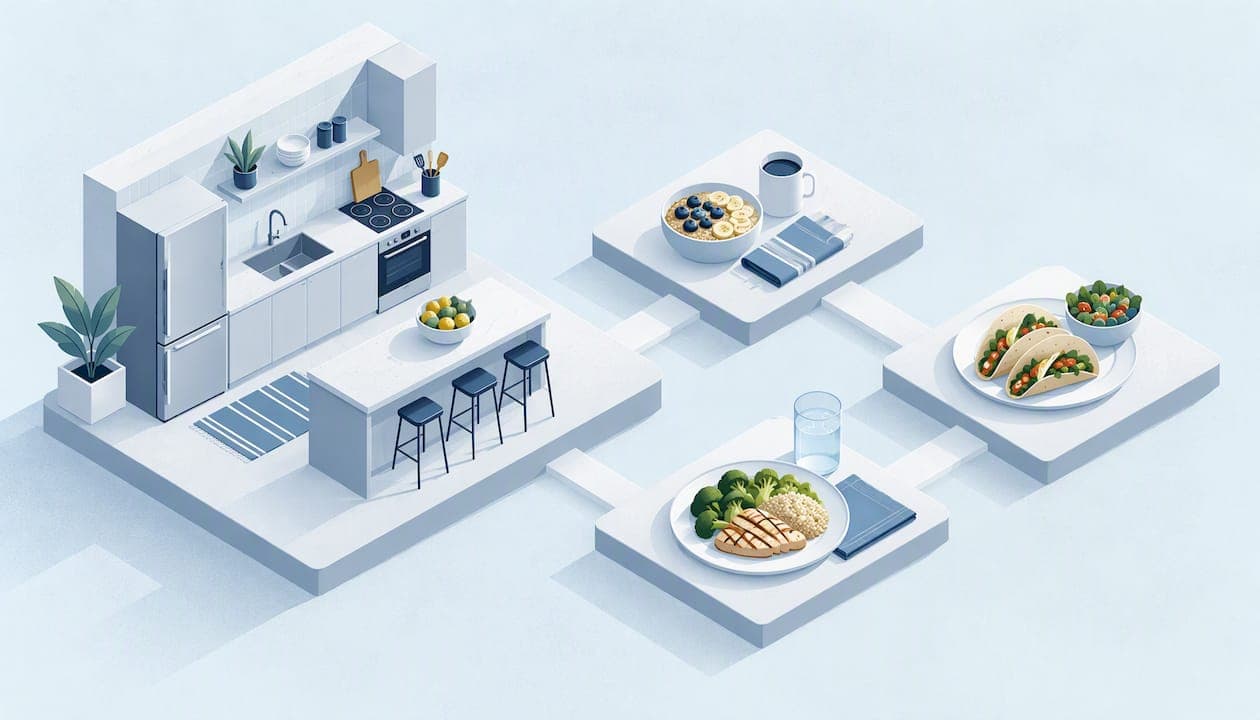
The easiest way to feed a family on vacation is to cook simple meals in your own room: self-serve breakfasts, sandwich or wrap lunches, and one-pan or assembly dinners built from a short, overlapping grocery list. Restaurants then become a treat instead of a three-times-a-day bill. This guide gives you a day-by-day plan, a shopping approach that keeps costs down, the food-safety rules for coolers and leftovers, and how to make sure your room has a stove or hot plate before you book.
TL;DR
- Plan around three kinds of meals: self-serve breakfasts, no-cook or reheat lunches, and one-pan or build-your-own dinners.
- Buy a short list of overlapping ingredients (tortillas, potatoes, cheese, vegetables, one or two proteins) so nothing gets wasted.
- Cook once, eat twice: a grilled or slow-cooked protein becomes tomorrow's lunch.
- Keep perishables at 40°F (4°C) or below, and reheat leftovers to 165°F (74°C).
- A microwave alone limits you. A room with a cooking surface opens up the whole plan, and it is worth checking before you book.
Table of Contents
- Why a kitchen changes the vacation food budget
- What equipment you actually need
- Breakfasts the kids can make themselves
- Lunches that work on the go
- Dinners: one pan, one pot, or build your own
- Shop smart: overlapping ingredients and cooking once
- Our perspective: the kitchen is the plan
- Eating well on the road: packing and road-trip meals
- Keep it safe: coolers, the two-hour rule and leftovers
- Find a room that can actually cook
- FAQ
- Sources
Why a kitchen changes the vacation food budget
Feeding a family of four at restaurants three times a day adds up fast, and the cost is rarely the main frustration. The real problem is the logistics: hungry kids at 6 p.m., a wait for a table, and a menu nobody agrees on. A kitchen or kitchenette takes most of that pressure away.
Financial advice from a US credit union lands in the same place. Its travel food guidance suggests booking lodging with a kitchenette, mini-fridge or microwave, buying fresh ingredients at local markets and stores, keeping breakfasts and dinners simple, and balancing a few special meals with affordable ones. That is a sensible model: spend on one or two meals you will remember, and cover the rest yourself.
A practical rule is to eat out once a day at most. Most families find that the meal they actually want to eat out is dinner on one or two special nights, or a local breakfast spot. Everything else can come from the room.
What equipment you actually need
The meals below fall into three equipment levels. Know which one your room offers before you shop.
| Room setup | What you can make | Best meal styles |
|---|---|---|
| Mini-fridge only | Cold breakfasts, sandwiches, salads, fruit, yogurt | Assembly meals, picnic dinners |
| Fridge and microwave | Oatmeal, eggs in a mug, reheated leftovers, frozen meals | Reheat and assemble |
| Cooking surface (stovetop or hot plate), fridge, basic cookware | Scrambled eggs, pasta, rice bowls, stir-fries, quesadillas, one-pot meals | Nearly everything below |
The difference between the second and third rows is bigger than it looks. A microwave reheats; a cooking surface cooks. If you are planning to prepare dinners for several nights, a real burner is what makes the plan work. This is the gap we built our directory around, and we come back to it below.
Breakfasts the kids can make themselves
Breakfast is the easiest meal to win and the one where restaurants cost the most per calorie. Aim for items that need no recipe.
- Eggs, bacon and toast. One pan, ten minutes, and everyone eats the same thing. A roundup of quick vacation meals from a home-cooking site also leans on make-ahead and adaptable recipes, which suits a rental where you do not know what cookware you will find.
- Yogurt, granola and fruit. A self-serve spread is the format one popular grill-focused vacation plan uses for breakfast: fruit salad, yogurt with granola and scrambled eggs.
- Bagels and cream cheese. Zero cooking, and they travel well from the grocery store.
- Overnight oats. Mix in a jar the night before. They suit a mini-fridge-only room, and a road-trip food guide lists them among make-ahead breakfasts alongside yogurt-parfait kits, hard-boiled eggs and fruit.
A small tip that saves money: buy the family-size tub of yogurt and a bag of granola rather than single-serve cups. Everything keeps for the full week in the fridge.
Lunches that work on the go
Lunch is the meal most likely to be eaten at a pool, a park or in the car, so choose food that survives an hour without refrigeration. Keep in mind the two-hour rule covered in the food-safety section below.
- Sandwiches and wraps. Deli turkey or ham, chicken salad, or peanut butter and jelly. Chicken and avocado wraps appear on a family road-trip recipe list from BBC Good Food alongside Caprese sandwiches and flask soup.
- Pasta salad. It gets better as it sits, which makes it a good use of a pot and a fridge shelf. A Food Network guide to cooking at a rental points to an easy pasta salad for exactly that reason.
- Snack plates. Cheese, crackers, apple slices, hummus with cut vegetables, nuts and dried fruit. A university extension column on family vacations on a budget suggests shelf-stable foods such as whole-grain crackers, pretzels, dried fruit, peanut butter, nuts, popcorn and whole fruit, and says cut vegetables, string cheese, cut fruit and yogurt belong in a cooler.
- Leftovers. Last night's grilled chicken, shredded into a wrap, beats anything from a pool-side snack bar on both price and taste.
Pack lunches the night before. In the morning, everyone is already moving, and you will not be tempted to buy something on the way out.
Dinners: one pan, one pot, or build your own
Dinner is where a kitchen earns its keep. The pattern that works for families is a meal with few steps and little cleanup.
Assembly dinners
Taco, pizza and baked-potato bars let every family member customize their plate, which is the fastest way to end the "I don't like that" negotiation. One family-food site describes these build-your-own formats as a way to cook less while still giving everyone what they want. Set out toppings in bowls and let the kids run it.

One-pot and sheet-pan dinners
Spaghetti with jarred sauce, chicken and rice, sausage and vegetables on a sheet pan: the same site lists sheet-pan dinners, one-pot meals, slow-cooker meals and family favorites like tacos and spaghetti as dependable choices because they use minimal ingredients and no specialty items. Check whether your unit has a sheet pan or oven before planning a sheet-pan night. If it only has a burner, stick to one-pot and skillet meals.
Grill nights
If your property has a communal grill, burgers, kebabs, shrimp skewers and chicken wings are a vacation staple. A grill-focused vacation plan pairs them with grilled nachos and sides. Ask the property whether the grill is available and what it supplies.
A sample five-night dinner plan
| Night | Dinner | Leftover plan |
|---|---|---|
| 1 | Spaghetti with meat sauce and a bagged salad | Pasta salad for lunch |
| 2 | Taco bar with chicken or ground beef | Quesadillas for lunch |
| 3 | Eat out, one special meal | None |
| 4 | Baked potato bar with cheese, broccoli and chili | Chili over rice |
| 5 | Rice bowls or stir-fry with the last vegetables | Finish everything |
Notice how tortillas, cheese, potatoes and vegetables each appear in more than one meal. That is the whole trick, and it is covered in the next section.
Shop smart: overlapping ingredients and cooking once
A long grocery list is what makes vacation cooking feel like work. Shorten it by choosing ingredients that do several jobs. A budget-focused family blog recommends using overlapping tortillas, potatoes, cheese, vegetables and protein for tacos, wraps, quesadillas, sheet-pan meals, baked potatoes, rice bowls and stir-fries, and keeping dishes to one pot or one pan.

Cook once, eat multiple meals. Make pulled pork or grilled chicken on night one, then use the leftovers for lunches or another dinner. Remember the leftover rules below.
Use store-bought shortcuts without guilt. Premade burgers, marinated chicken, frozen pizza, chicken tenders, frozen lasagna, tater tots, bagged salads and canned soups all appear on one vacation meal list. On a night when everyone is tired, a frozen pizza and a bagged salad is a perfectly good dinner.
Shop on arrival, not before. Unless you are driving, buy groceries near your destination. Local markets also give you a taste of the place at a lower price than a restaurant; the same budgeting guidance mentions picnic-style dinners with deli or bakery foods as a cheap, local option.
Bring a few staples. Olive oil, salt, pepper, a spice mix and a small bottle of dish soap cost little and are rarely stocked in a rental. Check what the property provides first.
Our perspective: the kitchen is the plan
Most vacation meal advice starts with recipes. We think it should start with the room. A family can have the best taco-bar idea in the world and still end up eating microwave leftovers because the "kitchenette" turned out to be a mini-fridge and a countertop microwave.
That is why every room we list has to show a cooking surface, confirmed by both a person and an AI model, with the evidence on the listing. Rather than listing a property because it says "kitchen" somewhere on its page, we publish only room types that meet one kitchen standard, so you can see which room has the burner before you book.
For families, that changes the whole trip. Breakfasts stop being a negotiation, dinners stop being a line at a restaurant, and the food budget goes toward the one or two meals you actually want to eat out. Pair a room that can really cook with the short, overlapping grocery list above, and you have a trip that feels like home with better scenery.
Ross
Eating well on the road: packing and road-trip meals
If you are driving to your destination, the first and last meals happen in a car. Plan portable food that does not need a plate.
- Cold options. A road-trip guide recommends sturdy sandwiches, jar salads and hummus-vegetable wraps for lunch, and cold roast chicken or pasta salad for dinner.
- Hearty, packable food. Outdoor retailer REI's road-trip advice from a chef suggests salads, roasted chicken, smoked salmon and marinated hard-boiled eggs, with yogurt, fruit and granola for breakfast.
- Frozen meals as ice packs. Completely frozen meals can stay cold and mostly frozen in a cooler covered with ice for at least 24 hours, according to one vacation freezer-meal guide. Freeze a lasagna or chili at home, and it doubles as the first night's dinner.
One note about drive-day hotels: if you stop overnight halfway, a room with a mini-fridge and a cooking surface lets you turn the cooler's contents into a proper dinner instead of a drive-through run.
Keep it safe: coolers, the two-hour rule and leftovers
Food safety is the one part of vacation cooking where cutting corners costs you a ruined trip. These are the rules from US food-safety agencies.
- Keep cold food cold. Transport perishables in a cooler with enough ice to hold them at 40°F (4°C) or below, and use an appliance thermometer to check.
- Watch the clock. Perishable food should not sit between 40°F and 140°F for more than 2 hours, or more than 1 hour when the temperature is above 90°F (32°C). That includes the beach and the car.
- Fill the cooler. A full cooler stays cold longer; fill extra space with ice, gel packs or frozen water bottles. Keep a separate cooler for drinks, since it gets opened more often, and keep coolers in the shade.
- Separate raw meat. Pack raw meat and poultry in their own cooler, or below ready-to-eat foods if you have only one.
- Cook to temperature. Use a food thermometer. The safe minimum chart lists 160°F (71°C) for ground meat and 165°F (74°C) for casseroles. A cheap digital thermometer is worth packing.
- Reheat leftovers properly. For maximum safety, reheat leftovers to an internal temperature of 165°F (74°C).
- Wash up. Wash hands with soap and water for at least 20 seconds, and never use the same platter and utensils for raw and cooked meat or poultry, as the same guidance points out.
If anyone in your group is pregnant, elderly, very young or has a weakened immune system, ask a doctor or dietitian which foods to avoid before you travel.
Find a room that can actually cook
Once you have the meal plan, the booking is the part that makes or breaks it. On HotelKitchens, every listed room is checked for a cooking surface by both a human reviewer and an AI model, and the evidence is shown on the listing, so a microwave and a mini-fridge do not pass as a kitchen. Each listing also carries guest ratings, so you can see how other travelers rated the stay.

Start with all destinations, or go straight to a family-friendly market such as Orlando, Las Vegas or the rest of Florida. If you want to know how a room earns its place, read how we verify kitchens. Prices and availability come from our booking partners at the time you click through.
FAQ
What are the easiest meals to make on a family vacation?
Breakfast spreads (eggs and toast, yogurt and granola, bagels), sandwiches or wraps for lunch, and build-your-own dinners like tacos or baked potatoes are the easiest. They need few ingredients, almost no recipe, and every family member can customize their plate. One-pot pasta and sheet-pan dinners are the next step up if your room has a stove or oven.
How can we eat cheaply on vacation without relying on restaurants?
Book a room with a kitchenette, shop at local grocery stores and markets, and keep breakfast and dinner simple. Picnic dinners from a deli or bakery are cheap and local. Save restaurants for one or two special meals, as financial guidance on vacation food budgets suggests.
Do we need a full kitchen, or is a microwave enough?
A microwave covers oatmeal, reheated leftovers and frozen meals, but it rules out pasta, stir-fries, eggs cooked in a pan and most one-pot dinners. For a stay of more than two or three nights, a cooking surface gives you far more choice. That is why we only list rooms with one.
How long can food stay out on vacation?
No more than 2 hours between 40°F and 140°F, and no more than 1 hour when the temperature is above 90°F, according to FoodSafety.gov. At the beach or in a hot car, treat the shorter limit as your rule.
What meals travel well for a road trip?
Sturdy sandwiches, wraps, jar salads, pasta salad, cold roast chicken, hard-boiled eggs, fruit and cheese with crackers all hold up in a cooler. Keep them at 40°F (4°C) or below and eat them within the time limits above.
Sources
- Travel Tips to Stretch Your Vacation Food Budget (Navy Federal Credit Union)
- 21 Easy Vacation Meals You Can Make Almost Anywhere (Martha Stewart)
- Easy Vacation Meals for the Grill (The Kitchn)
- 48-Hour Road Trip Food Guide (Roadtrippers)
- Family road trip recipes (BBC Good Food)
- What to Cook at Your AirBnB (Food Network)
- Prairie Fare: Make memories without breaking the bank on family vacations (NDSU Extension)
- Easy Vacation Meals (Family Food on the Table)
- Affordable Family Meals You Can Make on Vacation (Fireside Fairy)
- Chef Maria Hines on fueling a road trip (REI)
- 25+ Freezer Meals to Take on Vacation (Thriving Home)
- Extinguishing the Risk of Foodborne Illness (FoodSafety.gov)
- Keep Food Cool for the Summer (FoodSafety.gov)
- Food Safety While Hiking, Camping & Boating (USDA FSIS)
- Safe Minimum Internal Temperatures (FoodSafety.gov)
- Whether Donating or Receiving Food This Thanksgiving (FoodSafety.gov)