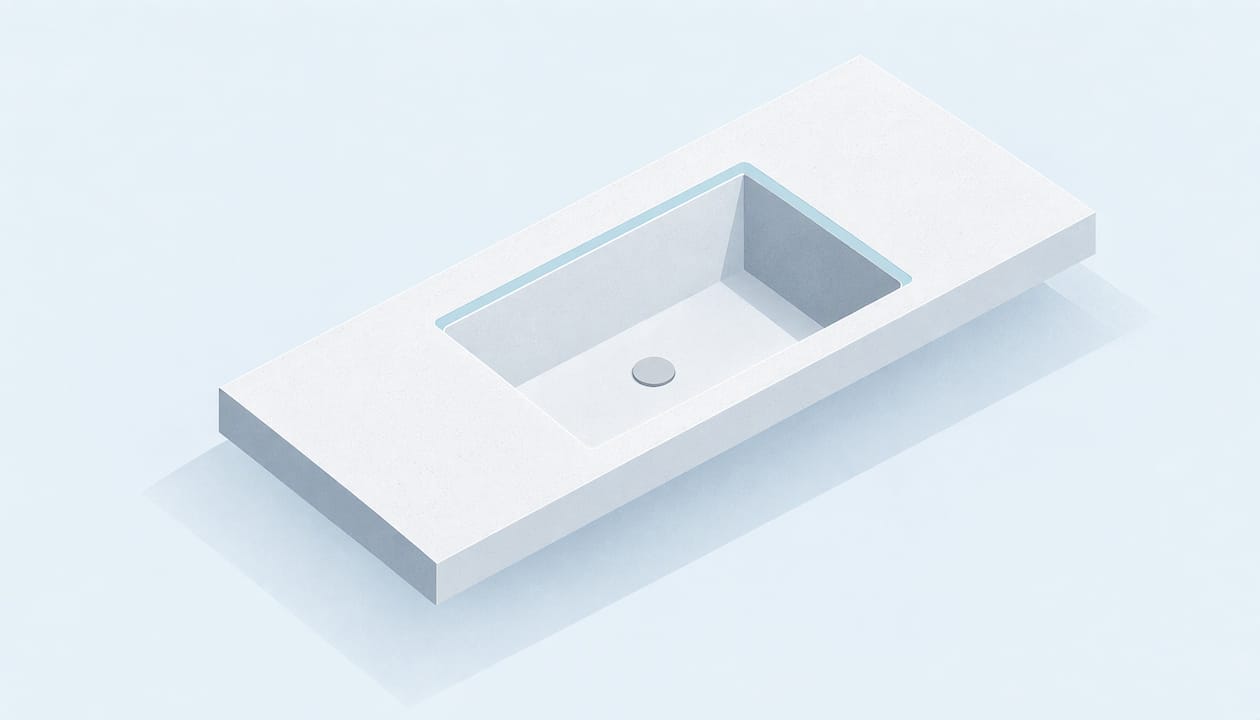
A kitchen sink in a hotel room is almost always a small single basin set into a countertop, with hot and cold water. It is built for rinsing produce, washing a few dishes and filling a pot. A sink alone does not make a kitchen, though: what matters is whether the same room also has a cooking surface, a refrigerator and the space to use them. That is the part worth confirming before you book, and it is why we list only rooms where a cooking surface is verified.
TL;DR
- A hotel kitchenette sink is usually one compact basin in the counter, meant for washing produce, rinsing dishes and refilling water containers, not for a full home-sized cleanup.
- It differs from the bathroom vanity sink: it is typically larger and deeper, with a drain made for food waste, and it sits in the cooking area.
- Some US states set minimum rules for lodging kitchens, including a real kitchen sink with hot running water and a cold refrigerator, so the sink is a sign of a properly equipped unit.
- A sink does not tell you whether you can cook. Check the room type for a stovetop or cooktop, not only a microwave.
- Plan two real meals against the room's equipment, and bring or request what is missing.
Table of Contents
- What a kitchen sink in a hotel room is for
- Kitchen sink or bathroom sink: how to tell the difference
- What US rules say about lodging kitchen sinks
- A sink is not a kitchen: what else to look for
- How to confirm the room before you book
- Who needs to check what
- Keeping the kitchenette sink in good order
- Find rooms where you can cook
- FAQ
- Sources
What a kitchen sink in a hotel room is for
In a kitchenette, the sink is the fixed point of the whole setup. It is where you wash fruit and vegetables, rinse a pan after the pasta, clean a coffee maker, fill a kettle or refill a baby bottle. Per a guide to hotel kitchenettes, the basin is usually a single bowl built into the countertop with a faucet, and it may be smaller and shallower than a sink at home. That suits the job. You are cleaning small items and prepping ingredients, not soaking a roasting tray.
The practical consequence is that you should cook the way the sink lets you. One basin means one task at a time: while the dishes sit in it, you cannot also rinse lettuce. Most guests find a simple rhythm works: wash and prep first, cook, then wash up in one go. Washing dishes right after you use them and wiping the counter after each meal keeps the small space workable, and during your stay that upkeep is yours.
If you are comparing what you actually get beyond the sink, our guides to hotel kitchen utensils and hotel kitchen appliances go through the room contents item by item.
Kitchen sink or bathroom sink: how to tell the difference
Some rooms have only a vanity sink outside the bathroom, a bar sink in a wardrobe nook or a basin in the bathroom itself. These are not kitchen sinks, and the difference shows up in a few ways.
| Feature | Kitchen (kitchenette) sink | Bathroom or vanity sink |
|---|---|---|
| Typical width | Often over 30 inches | Typically 24 to 30 inches |
| Material | Often stainless steel | Often ceramic or porcelain |
| Drain | May be built for food waste | Simple, made for handwashing |
| Location | In the counter by the cooking area | In the bathroom or vanity area |
Those are general product norms, not a guarantee for any one room, and hotel units are often smaller than average. The quick test is location and purpose. If the sink sits in a counter run with space beside it for a cutting board and a cooktop, it is a kitchen sink. If it sits in a vanity with a mirror above it, it is for washing hands and brushing teeth, and rinsing greasy pans there is a poor idea.
What the sink on top of the counter is called
A sink whose rim sits over the counter is called a drop-in sink, also known as a self-rimming, overmount or top-mount sink. A visible lip rests on the edge of the cutout and the basin is held by that lip and hidden clips. It is common in kitchenettes with laminate counters. The term describes how the sink is installed, not how good the kitchen is, so it tells you nothing about whether the room can cook.

What US rules say about lodging kitchen sinks
There is no single national standard for a hotel room kitchen. Lodging sanitation is set by states and local health departments, so what a guest can expect changes by place. Three examples show the pattern.
Washington. The state's rule on lodging kitchens requires a kitchen sink, defined as a sink other than a handwashing sink, large enough for the largest utensil in the unit. It also calls for hot running water, refrigeration at 45°F or lower, permanently installed cooking equipment and cleaning and sanitizing of food areas between guests. Units with only a microwave and a mini refrigerator are exempt from this kitchen rule.
Virginia. Kitchen-equipped lodging units must have a sink suitable for dishwashing with hot and cold water, a refrigerator holding food at 41°F or less, and utensils that are washed, rinsed and sanitized after each occupancy.
Florida. Public lodging rules require a kitchen sink with hot and cold running water under pressure. Where an establishment cannot meet the dishware-cleaning requirements, it must post a notice in each guest room that provides dishes or utensils, saying they were cleaned with ordinary household facilities but not sanitized to public food-service standards.
Missouri takes a related view from the other side: its lodging manual exempts rooms with kitchenettes from the three-compartment sink wash, rinse and sanitize routine that applies to rooms without them, because guests are expected to wash up in their own sink.
What this means for you: in states with these rules, a real kitchen sink with hot water is part of what a kitchen unit must have, and a notice on the dishware tells you how the hotel handles cleaning. Outside the United States the standard differs. In England and Wales, for example, a food preparation area in a unit for more than one person needs a sink with a drainer, constant hot water and cold drinking water, plus a worktop of at least 1m by 0.6m. If you are booking abroad, check the local rule rather than assuming the US one applies.
A sink is not a kitchen: what else to look for
This is where most disappointment starts. A room can have a sink, a small refrigerator and a microwave and still be unable to produce a hot meal beyond reheating. Wikipedia's entry on kitchenettes describes them as small cooking areas that usually include a refrigerator and microwave and may add a sink and other appliances. Note the word "may": the sink is optional in that definition, and a cooktop is not guaranteed.
So read the room description for the following, in this order:
- A cooking surface. A two-burner cooktop, induction plate or full range. A microwave alone is reheating, not cooking.
- The sink itself. Is it in the kitchen area, and does the description say kitchen sink rather than vanity?
- Refrigerator size. A compact under-counter unit holds far less than a full-size one, and a freezer compartment is not a given.
- Counter space. The sink and cooktop can leave very little room to chop.
- Cookware, dishes and utensils. Whether the room supplies pots, pans and a knife, or you must request or bring them. Our guide to what utensils you actually get covers the usual contents.
- What cooking is allowed. Some properties have rules on cooking in rooms, so confirm it for your room type.
A practical way to judge the room is to pick two meals you would really make and test them against the room's equipment, storage and working space. If you would make scrambled eggs and a pasta dinner, you need a burner, one pot, one pan, a colander or a way to drain, and a sink big enough to wash them. If you want to bake, you need an oven, which is a different room type; see our guide to a hotel kitchenette with an oven.
How to confirm the room before you book
Amenities vary by brand, property and even room type within the same building, so a familiar chain name is a starting point rather than an answer. A property may advertise "kitchen" across the whole hotel while only a few room categories have one. Follow this routine:
- Find the room type, not just the hotel. Look for "studio suite with kitchen" or "kitchenette" in the specific room name and photos.
- Look for a photo of the counter. You want to see the sink and the cooktop in the same image. A picture of only a mini bar is not evidence of a kitchen.
- Read the amenity list for cooking surface wording. Words like cooktop, stovetop, burners or range count. "Microwave" and "mini fridge" alone do not.
- Check the dishware situation. Ask whether pots, pans and dishes are supplied and how they are cleaned between guests.
- Confirm in writing for a long stay. If you are staying for weeks, a short message to the property about the exact equipment saves surprises at check-in.
This is the work our directory is built to take off your hands. Every room we list is checked for a cooking surface by both a person and an AI model, and the evidence is shown on the listing, so you can see which room types have cooking amenities. We publish only rooms that meet one kitchen standard. You can read how the checks work on our verification page.
Who needs to check what
Families
With children, the sink is a feeding tool: it washes bottles, fruit and small dishes. A family should look for a sink in the kitchen area rather than the bathroom, a refrigerator big enough for milk and a day of groceries, and a cooking surface for hot breakfasts. Our guide to safety when cooking in your room covers keeping children clear of hot surfaces.
Guests with dietary needs
If you manage allergies, a medical diet or religious dietary rules, the ability to prepare your own food matters more than convenience. Wash cookware and utensils yourself before first use, and wipe the counter, as you would at home. Where a hotel supplies dishware, the state rules above describe the cleaning it should follow, and a posted notice, as Florida requires in some cases, tells you whether items were sanitized to food-service standards or only cleaned with household facilities. If you have a serious allergy, speak with your doctor about what precautions suit you and confirm with the property how shared items are cleaned.
Extended-stay business travelers
Over a week or more, a sink that handles only a coffee cup becomes a daily annoyance. Prioritize a kitchen-area sink with room for a drying rack, a cooktop, a refrigerator with a freezer compartment and a work surface. Our guide on rooms with a kitchen and a living room helps if you also need space to work.
Budget-conscious guests
The saving comes from cooking breakfast and a few dinners rather than eating out every meal. That only works if the room can cook, so the cooking surface check comes before anything else. A sink and a microwave get you instant noodles and leftovers; a cooktop gets you proper meals.
Keeping the kitchenette sink in good order
The sink is the part of the kitchen guests handle most, and small habits make a stay smoother:
- Wash up promptly. Dishes left in a single basin block the sink for the next task.
- Keep food scraps out of the drain. Kitchenette drains are modest, so scrape plates into the trash first. Never pour grease down it.
- Wipe the counter after each use. Include the cooktop and microwave once they are cool.
- Use hot water for greasy pans. Hot running water is a baseline requirement in the state rules above, so you should have it.
- Dry things and leave the space tidy. A clean, clear counter makes the next meal easier and the checkout simpler.
If your stay is longer, our readers' favorite habit is simple: keep a small dish brush, a sponge and dish soap on hand. For a wider routine, things to check in a full kitchen before you start cooking apply well to hotel suites too.
Our view: the sink is the clue, the cooktop is the answer
When guests ask us about sinks, the real question underneath is whether they can cook in the room. A sink is a good sign, because it means the room was set up for food at all. But it is a sign, not proof. We built the directory around the thing that decides the meal: a cooking surface.
That is why every room we list is checked by a person and by an AI model, with the evidence shown on the listing, and why we publish only rooms that meet one kitchen standard. A guest should not have to decode "kitchenette" from a brand name or a photo of a mini bar. They should see which room type has the cooking surface and book that one.
If you plan to cook more than once during your trip, start with the room that can actually do it.
Ross
Find rooms where you can cook
If you want to skip the guesswork, start with our directory of hotels with kitchenettes and verified cooking surfaces. Each listing carries guest ratings and room-level kitchen evidence, so you can compare the room types that suit your trip. If you need an oven and a full range, browse hotels with full kitchens, or search by destination on our locations page.

Booking happens through our booking partners, so you can go from a verified room to a reservation in a few clicks.
FAQ
Do all hotel rooms with a kitchenette have a kitchen sink?
No. A kitchenette is a small cooking area that usually has a refrigerator and a microwave, and a sink is only sometimes included. Check the room description and photos for a sink in the counter area. Listings on our site show the room-level kitchen evidence so you can see what the room has.
Can I wash dishes in the bathroom sink if there is no kitchen sink?
It is better not to. A bathroom sink is typically smaller, made for handwashing and has a simpler drain. Washing greasy dishes there is awkward and can clog it. Choose a room type with a kitchen-area sink if you plan to cook.
Are the dishes and cookware in a hotel kitchenette clean?
Rules vary by state. Virginia requires kitchen units to have utensils washed, rinsed and sanitized after each occupancy, and Florida requires a notice in rooms where the dishware was only cleaned with household facilities. Look for any posted notice and wash items again before first use if you prefer.
What is the sink called when it sits on top of the counter?
It is called a drop-in sink, also known as a self-rimming, overmount or top-mount sink. Its rim rests on the counter around the cutout. Many hotel kitchenettes use this style, but the term says nothing about whether the room has a cooktop.
How do I know a hotel room can actually cook a meal?
Look for a cooktop, stovetop, burners or a range in the specific room type, not only a microwave. Our directory lists rooms where a cooking surface has been verified by a person and an AI model, with the evidence shown on each listing.
Sources
- What Is a Kitchenette in a Hotel Room? Room Check Guide
- Bathroom Sink vs Kitchen Sink: Key Differences Explained
- WAC 246-360-110, Washington State Legislature
- 12VAC5-431-450. Lodging unit kitchens, Virginia Administrative Code
- Fla. Admin. Code R. 61C-3.001, Sanitation and Safety
- Sanitation/Housekeeping, Missouri Department of Health and Senior Services
- Self-contained holiday accommodation standard, England and Wales
- Kitchenette, Wikipedia
- A Quick Guide to Drop-In Kitchen Sinks
- A hotel kitchenette: check what you can actually cook