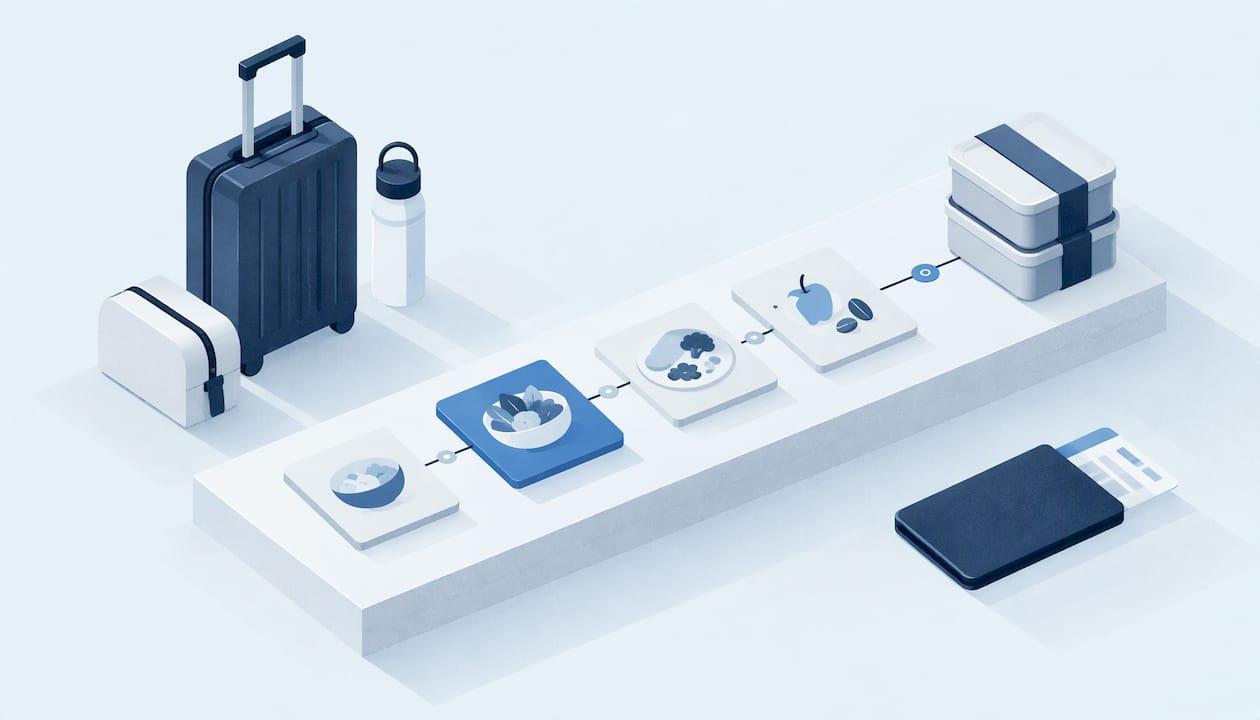
The best way to meal prep while traveling is to prep only part of your meals. Cook or assemble the foods that travel well, buy fresh items after you arrive, and match the plan to the kitchen you will have. A cooler and a hotel mini-fridge support cold meals. A room with a real cooking surface lets you cook dinner on the spot.
Below you will find a step-by-step plan, ideas for every meal, food safety rules with temperatures, and a way to choose lodging so your prep matches your equipment.
TL;DR
- Start with your lodging. Whether you have a mini-fridge, a microwave or a full cooktop decides what you should prep at home.
- Prep a portion, not everything. Sort meals into cook, assemble, eat out and backup instead of planning each one.
- Keep perishable food at 40°F or below and do not leave it out more than 2 hours.
- Make easy meals for travel and activity days, and save real cooking for slow evenings.
- Staying in a room with a verified cooking surface turns "prep" into "cook fresh" and cuts the amount you carry.
Table of Contents
- Start With the Kitchen You Will Have
- A Simple Five-Step Plan
- Travel Meal Prep Ideas by Meal
- Keeping Food Safe on the Way
- Prep for Hotel Rooms Without a Kitchen
- Dietary Needs, Allergies and Protein Goals
- How Prep Helps Your Budget
- What We Think: Prep Less, Cook More
- Find a Room That Fits Your Meal Plan
- Packing List for a Cooking Trip
- FAQ
- Sources
Start With the Kitchen You Will Have
Most travel meal prep advice skips the first question: where will you cook, and with what? A plan built around a cooler and a microwave looks nothing like a plan built around a two-burner stove.
One eight-step trip food planning guide puts equipment early in the process. You map the destination, activities and accommodation, estimate how many meals you need, check what equipment is available, and only then decide what to prep, what to pack and what to buy on arrival.
Three common setups:
| Your setup | What works | What to prep at home |
|---|---|---|
| Cooler only (road trip, camping) | Cold meals, sandwiches, wraps, salads | Fully made meals, portioned and labeled |
| Mini-fridge and microwave | Reheated dinners, oatmeal, pre-cooked rice pouches | Proteins, sauces, chopped vegetables |
| Kitchenette or kitchen with a cooktop | Fresh cooking, one-pot dinners, eggs, pasta | Seasoning blends, a few sauces, snacks |
The more equipment you have, the less you need to carry. That is the main reason families on week-long stays often do better with a kitchen than with a bigger cooler. Our guide to what hotel kitchen appliances you really get in the room covers what each setup usually includes.
A Simple Five-Step Plan
1. Count meals, including travel days
Write out every breakfast, lunch, dinner and snack from departure to return. Take a Chef's planning advice is to include travel days in that count and to set a daily food budget with a small reserve for surprises.
A useful reference is a road trip plan for two people over 60 hours: 6 breakfasts, 6 lunches, 4 dinners and 12 snacks. Notice the snack count. Snacks fill the gaps that derail plans.
2. Sort meals into four buckets
PlanEat AI's vacation meal planning guide suggests dividing meals into cook, assemble, eat out and backup. You do not have to plan each meal from scratch. A trip of seven dinners might look like this:
- 3 cook nights (you have time and a stove)
- 2 assemble nights (wraps, salad plates, snack dinners)
- 1 eat-out night (the restaurant you actually came for)
- 1 backup night (shelf-stable or frozen)
3. Match effort to the day
REI's chef-led road trip fueling guide recommends easy meals on big travel or activity days and cooking when you can take your time. Put your simplest meals on arrival day and on the day of that long hike or tour.
4. Decide what to prep, what to pack, what to buy
Prep at home what is hard to find or slow to make: cooked chicken, a pot of rice, muffins, seasoning blends. Buy perishables like produce, milk and bread at a grocery store near your lodging. This keeps your cooler light and your food fresh.
5. Keep a backup
Delays, storms and overambitious itineraries happen. PlanEat AI recommends keeping a shelf-stable or freezer backup dinner and a backup snack plan. A box of pasta and a jar of sauce, or a few pouches of pre-cooked rice and a can of beans, is enough.
Travel Meal Prep Ideas by Meal
Choose recipes that taste fine cold or at room temperature, travel well and need no last-minute work. Emily Epicure's make-ahead travel meal ideas point to one-pot meals, salads, wraps and overnight oats.
Breakfasts
- Overnight oats in jars
- Hard-boiled eggs or chilled frittata bites, which REI's guide lists among its breakfast suggestions
- Individual yogurt or cottage cheese, and dry oatmeal with flaxseed, dried fruit and nuts, as in Duke Health's traveler guidance
- Muffins or egg muffins baked ahead
Lunches
- Sandwiches, tortilla wraps or lettuce wraps
- Pasta salad or quinoa salad
- Mason jar salads with dressing at the bottom
- Tuna and crackers, nut butter wraps and other items that do not need a fridge
Packed for Life's road trip meal list sorts options by whether they need refrigeration, which helps when you are building a cooler.
Dinners
- Burritos, falafel wraps or rice-paper rolls you can eat cold
- Roasted chicken with rice and vegetables
- Risotto, polenta or stew, which REI lists as prepared dinners that reheat well
Snacks
- Whole fruit, homemade trail mix, cut vegetables with single-serve hummus
- Cheese and crackers, jerky, energy balls
- Sunflower seeds and nuts
If you are choosing foods that hold up without ice, the same logic runs through endurance sports. This piece on long-distance cycling nutrition is a good model for portable, shelf-stable fueling.
Keeping Food Safe on the Way
Prepped food is only useful if it is safe to eat. These are the numbers worth memorizing.
Temperature. FoodSafety.gov gives the danger zone as 40°F to 140°F (4°C to 60°C). Food should not sit in that range for more than 2 hours, or 1 hour when it is above 90°F (32°C). Leftovers should be reheated to 165°F (74°C).
Cold transport. The CDC Yellow Book advises that perishable food in transit should arrive at least as cold as a refrigerator, 40°F or below, and recommends insulated packaging with frozen gel packs.
Cooler habits. EatRight.org suggests packing drinks in one cooler and perishable food in another, so the food cooler stays closed and cold. Apply the two-hour rule to food bought at airports or train stations too.
Raw meat. Iowa State University Extension recommends keeping raw meat separate from ready-to-eat foods, on the bottom of the cooler. The same page suggests bringing a thermometer to check final cooking temperatures, and discarding food you suspect has been out too long.
What needs no cooler. USDA food safety guidance lists whole fruits and vegetables, hard cheese, canned meat and fish, breads, crackers, peanut butter and pickles among the foods that do not require refrigeration. Build your shelf-stable layer from these.
Traveling abroad. The CDC advises that fully cooked foods served hot and foods you prepare carefully yourself are the safest choices, and it lists raw or undercooked foods to avoid. Cooking your own meals is one way to control that.
Label every container with the meal and the date. It saves you from digging through the cooler and guessing what is old.
Prep for Hotel Rooms Without a Kitchen
Sometimes the room has only a mini-fridge, a microwave and a coffee maker. You can still eat well.
Duke Health's guide says a mini-fridge can hold yogurt, milk, string cheese, salad greens, pre-cut vegetables, hard-boiled eggs, lunch meat and leftovers. The microwave handles oatmeal, pre-cooked rice pouches or a baked potato, and coffee-maker hot water works for oatmeal, cream of wheat or grits. It also suggests packing a can opener, reusable containers, utensils and a travel blender for smoothies.

For dinners, Better Homes & Gardens offers no-cook salads, charcuterie boards and microwave-adapted pasta or eggs for hotel rooms.
One caution from a traveler's blog: cooking in a room without a full kitchen makes hygiene harder, so wash hands, cutting boards and utensils carefully and avoid cross-contamination. Bring dish soap and a sponge. If your room has no fridge, our guide to hotel room refrigerators explains how to ask for one.
Also read the fine print on breakfast. If your hotel includes a morning meal, you can plan lunch and dinner around it. This overview of free breakfast hotels shows what to know before you book one.
Dietary Needs, Allergies and Protein Goals
Travel meal prep gives you more control than a continental breakfast or a gas station. Duke Health frames it as an investment in health: your own meals and snacks beat airplane food and fast food.
A few practical moves:
- Protein: hard-boiled eggs, tuna, nuts, cheese, lean meats, protein bars and Greek yogurt are all easy to carry.
- Dietary restrictions: bento-style boxes with nuts, cheese, hummus, whole-grain crackers and vegetables flex easily. Examples include dairy-free tuna salad, gluten-free crackers and lettuce wraps.
- Allergies: read labels on every packaged item and keep prepped foods in separate sealed containers. If you manage a serious allergy, ask your allergist how to plan for travel.
- Abroad: a translated dietary card helps in markets and restaurants, as Take a Chef suggests.
For a wider look at eating well on the road, see our healthy eating while traveling guide.
How Prep Helps Your Budget
Meal prep saves money when it replaces the meals that cost the most and are the least memorable: rushed breakfasts, airport lunches, an extra dinner you did not plan for.
PlanEat AI's approach is to choose which meals are worth cooking, reuse ingredients and keep a backup plan. The structure reduces overbuying and leaves room to eat out when you want to. A rotisserie chicken can become dinner, then wraps, then a salad topper. A bag of rice covers three meals.
You do not have to cook everything. One cooked meal a day, usually breakfast or dinner, often makes the biggest difference. For a longer cost plan, read our guide to saving money on travel food.
What We Think: Prep Less, Cook More
Most travel meal prep advice assumes you have no kitchen. It tells you to cook in advance, pack a cooler and carry everything. That works, but it is a lot of work before a trip meant to relax you.
We built HotelKitchens around a different idea. If your room has a real cooking surface, you can prep far less. Bring seasonings, a few staples and a plan. Buy the rest at a local grocery store. Families get dinners the kids will eat. Longer stays get rhythm and routine.
The catch is that "kitchenette" can mean very different things. A microwave on a shelf is not a stove. That is why every listing on our site is checked by both a person and an AI model for a cooking surface, with the evidence shown on the listing. We publish only rooms that meet one kitchen standard, so you know which room type has the cooking amenities before you book.
Plan your meals around the room you will actually have. That is the shortest path to a trip where you eat well without the stress.
Ross
Find a Room That Fits Your Meal Plan
If you want to cook on your trip, start by choosing a room that can do it. HotelKitchens lists hotels with verified in-room kitchens and kitchenettes, with guest ratings and room-level kitchen evidence on each listing.

You can browse hotels by location, or look at how we check each kitchen on our verification page. Before you book, our hotel kitchen checklist and guide to what utensils come with the room help you decide what to bring. Our hotel kitchen photos guide shows how to read listing images.
Packing List for a Cooking Trip
If you will cook, a short kit goes a long way. Pull from these lists based on your room:
- Always: reusable containers, can opener, dish soap, sponge, leftover bags, a small cutting board and a sharp knife in a sleeve. Where The Road Forks and KidTripster both list these basics.
- If you have a microwave only: microwave-safe containers, paper plates and a travel blender.
- If you have a stove: a pan or pot may come with the room, but check first. Seasoning blends, olive oil in a small bottle and a spatula cover most gaps.
- For food safety: a probe thermometer and frozen gel packs.
Pack the day-one meal in the top of your bag. Arriving tired and finding dinner ready is the best payoff of prepping.
Our guide to cooking on vacation has easy meal ideas for kitchen stays.
FAQ
How far ahead can I prep meals for a trip?
Cooked food held in a fridge should be eaten within a few days, and anything you want to keep longer should be frozen. Freeze complete meals before you go, and pack them frozen so they act as ice packs. Once food is out of cold storage, follow the 2-hour rule and keep it at 40°F or below.
What are the easiest meals to prep for a hotel stay?
Overnight oats, hard-boiled eggs, wraps, pasta salad and cut vegetables with hummus need little equipment. With a mini-fridge and microwave, add yogurt, rice pouches and leftovers. With a kitchenette, add one-pot dinners like pasta or stir-fry.
Is it safe to carry prepped food on a plane or long drive?
Yes, if you keep it cold. Use an insulated bag with frozen gel packs, and keep perishable food at 40°F or below. Do not leave it at room temperature for more than 2 hours. For flights, check current airline and airport rules on carrying food and gel packs.
How do I meal prep for a family on a week-long hotel stay?
Plan about half your dinners as cook or assemble meals, keep breakfasts simple, and stock easy snacks. A room with a kitchen or kitchenette makes this much easier because you can cook fresh and store groceries. Check the room type before you book so the kitchen matches your plan.
Sources
- How to Plan Food for a Trip: The Ultimate Guide
- How to plan meals for a trip
- How to Meal Prep for a Road Trip
- Vacation Meal Planning: Easy Food Strategy for Trips
- REI road trip fueling guide
- Duke Health: Meal Planning for Travelers
- Emily Epicure: Make-Ahead Travel Meals
- Packed for Life: Easy Road Trip Meals
- FoodSafety.gov
- CDC Yellow Book: Food and Water Precautions
- EatRight.org: Eating Right While Traveling in the U.S.
- Iowa State University Extension: Camping Food Safety
- Keeping Bag Lunches Safe (USDA FSIS)
- Better Homes & Gardens: Cooking in a Hotel Room
- Where The Road Forks: Cook in a Hotel Room Without a Kitchen
- KidTripster: Tips for Cooking in Your Hotel Room
- Dietium: Healthy travel meal ideas
- Long distance cycling nutrition
- Free breakfast hotels